

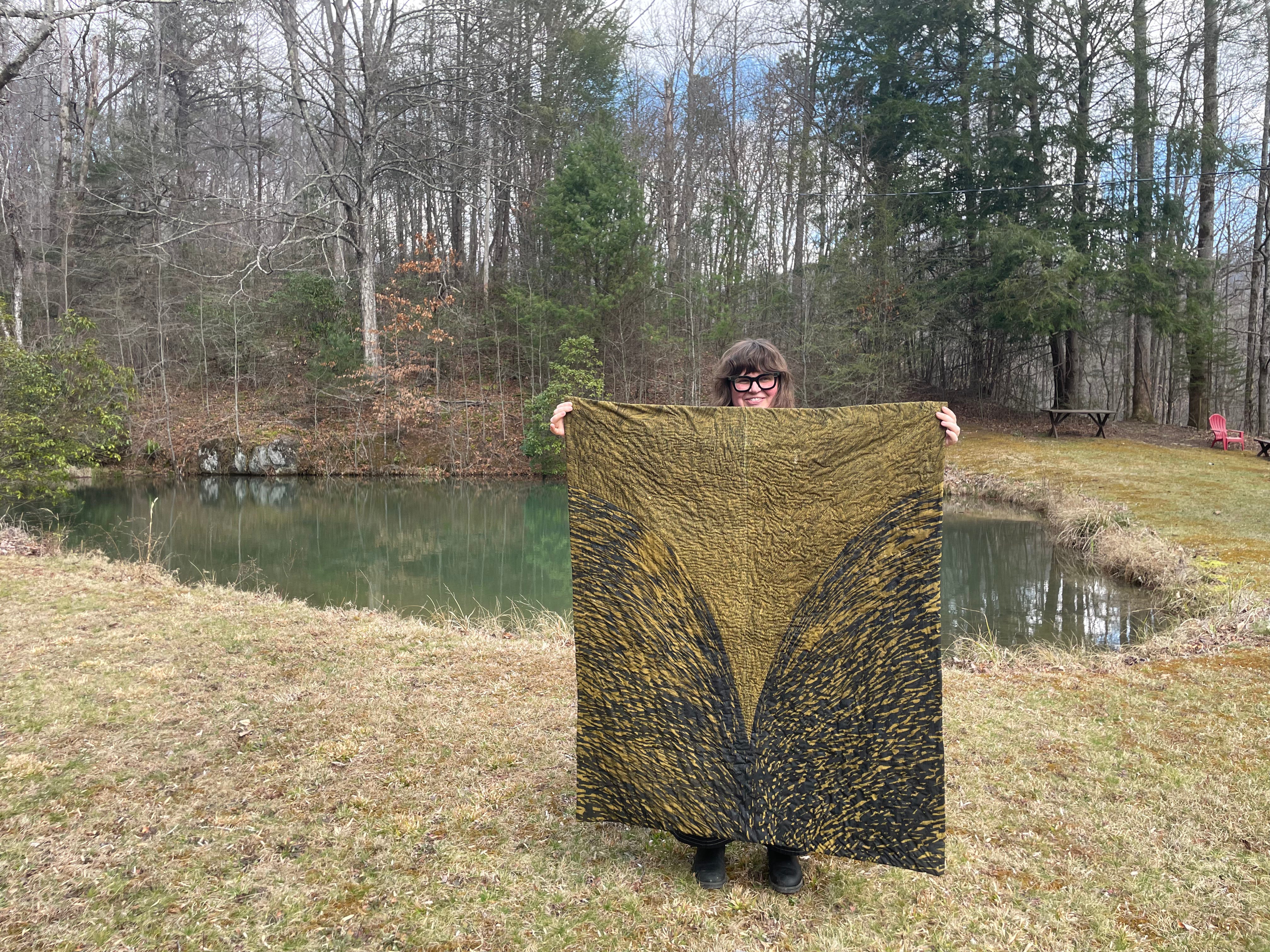
Recently, while at a residency at the Hambidge Center, I had the absolute pleasure of meeting interdisciplinary artist, Casey Engel. Casey makes ceramics, prints, and fibers (she also makes her own clothes!). She describes her process as embracing transformation.
I loved every interaction with Casey, who, has this bubbly and bright personality, with a biting sense of humor. While we were at Hambidge, Casey was reading Everything She Touched, the biography of Ruth Asawa, who was interned during the Japanese internment during World War II, and it was this weird synchronicity for me, because I was thinking about internment, partly because of the ICE detentions, and partly because I’m working on a project about Joseph Pilates. Pilates was interned on the Isle of Man during World War I, due to Germanophobia in England; he developed the Pilates method (then called Contrology) during this time. * Throughout my stay, Casey would keep telling me snippets from Ruth Asawa’s biography. For instance, on March 3rd, we were relieved when she didn’t have a car wreck like Asawa!
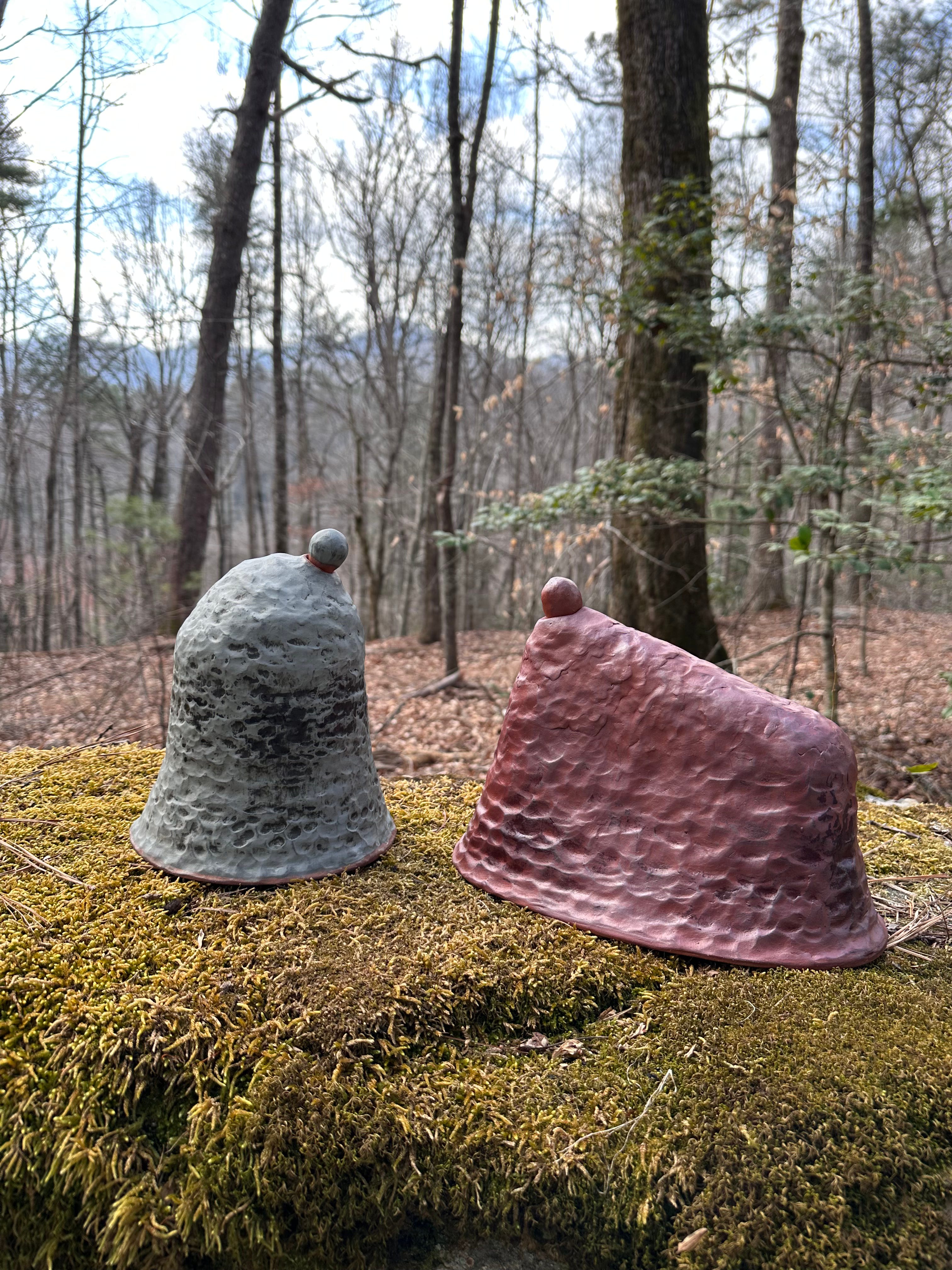
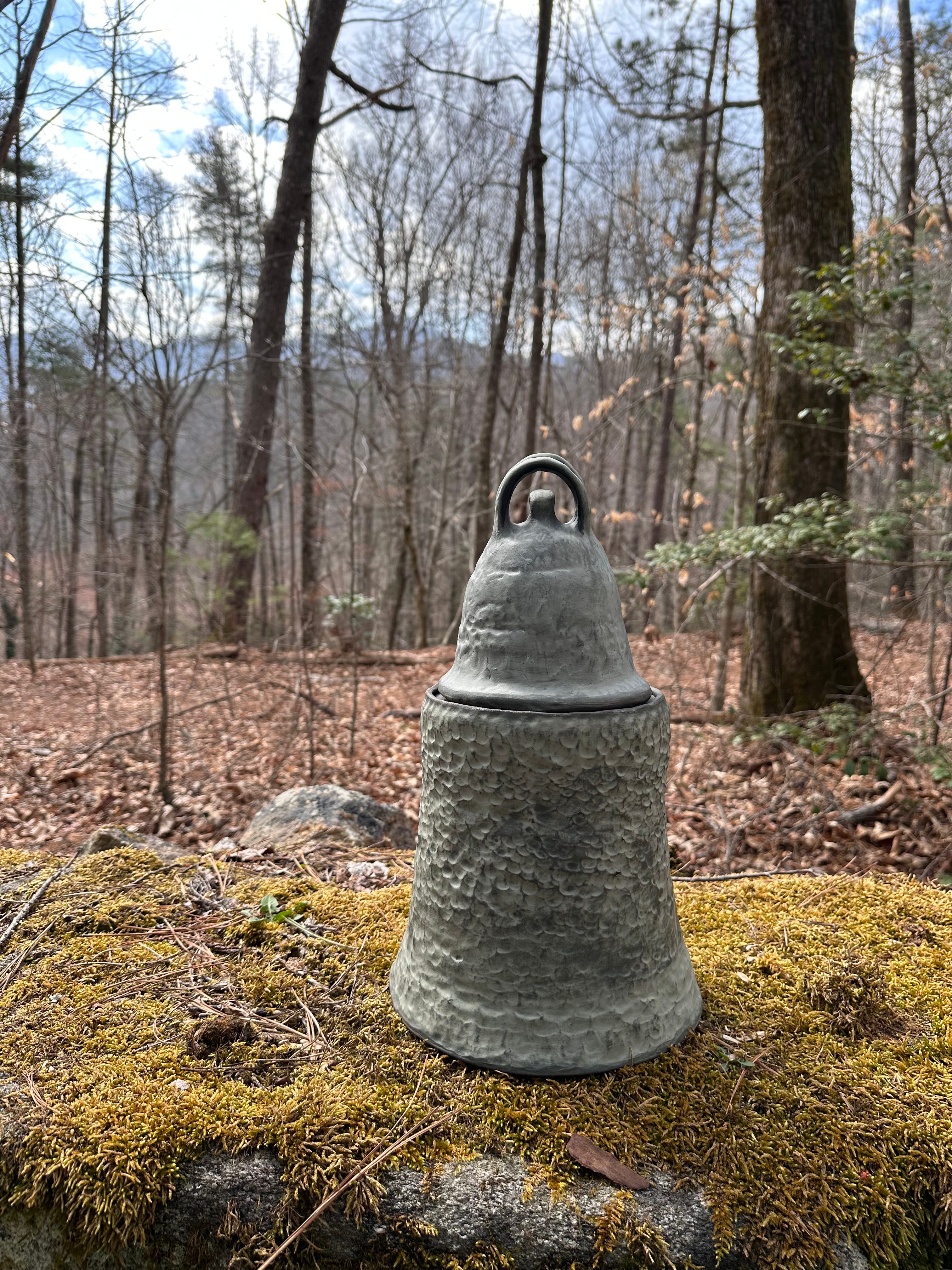
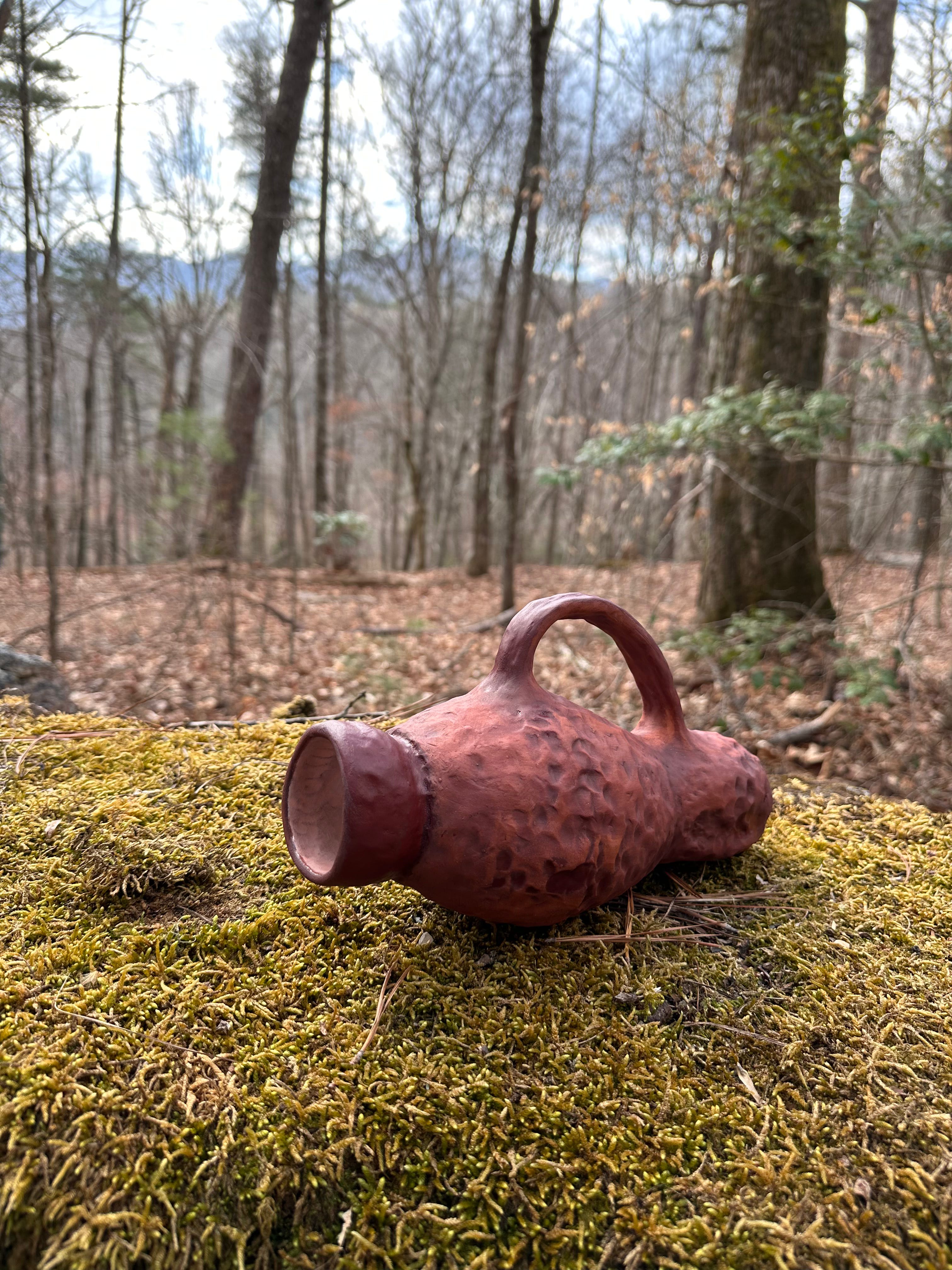
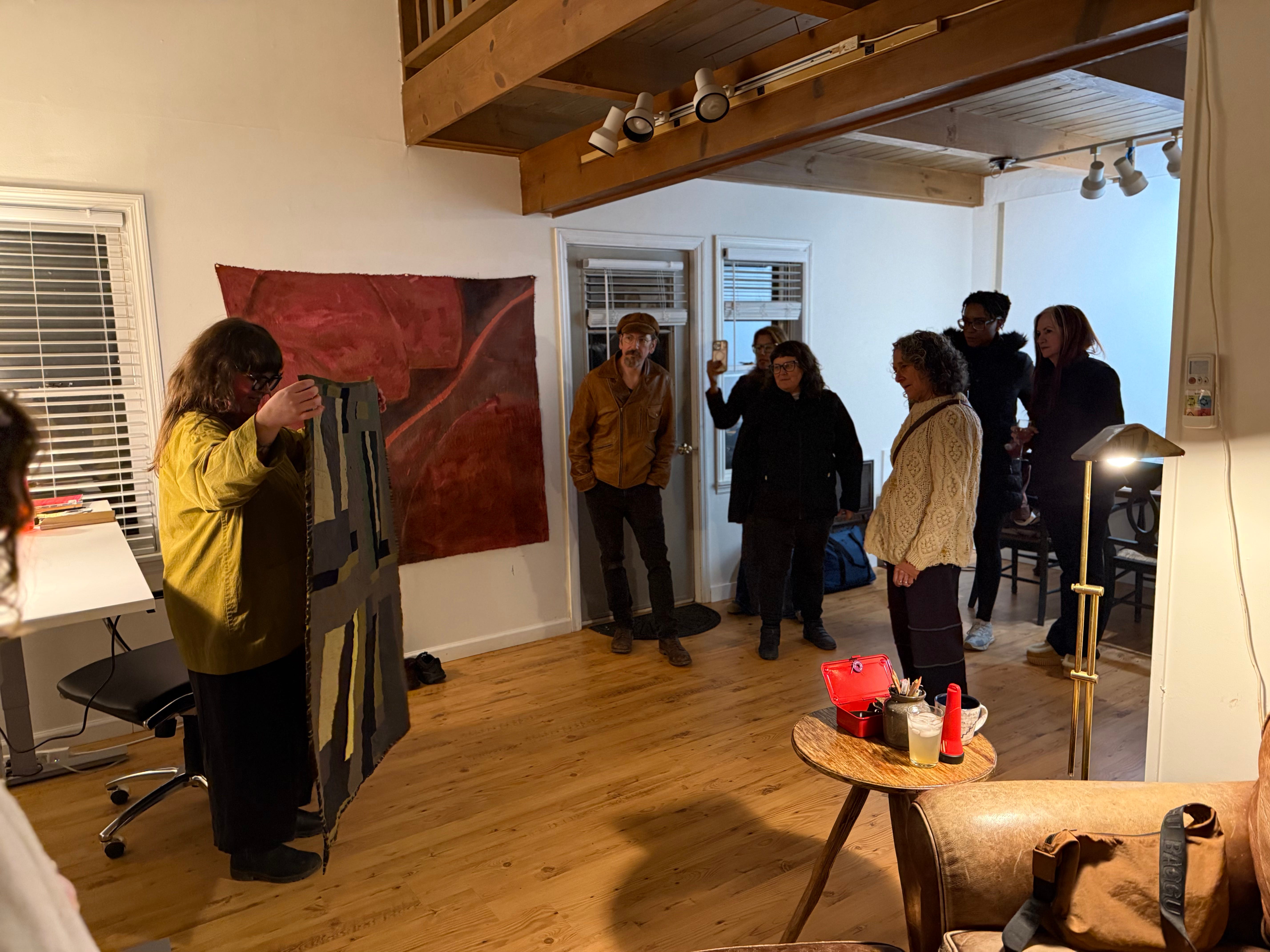
One night, as I walked Casey and fellow Mary Zompetti back to their studios, we stopped by the pottery studio to check out Casey’s sculptures, which she’d just fired. I was fascinated by them, by her insistence that they be non-functional…and then I saw her quilts, which she also paints! I loved Casey’s work so much that I decided I wanted other people to know about it. In her own way, Casey, being the wonder-sparking human that she is, inspired a rebrand for what I’m doing in this space, where, in the future, I will focus mainly on sharing information about people, books, and creative practice.
If you’d like to see Casey’s work in real life, you’re in luck—in December, her work will be exhibited in a solo show at the Appalachian Center for Craft in Cookeville, TN, where she also teaches workshops. Casey Engel is originally from Pensacola, Florida, and now lives in Asheville, North Carolina, where she recently decided to pivot to making art full-time. The two of us conducted the following interview via email/ Google docs.
What is your medium?
Quilted painting, ceramic sculpture, and printmaking
What did you make at Hambidge?
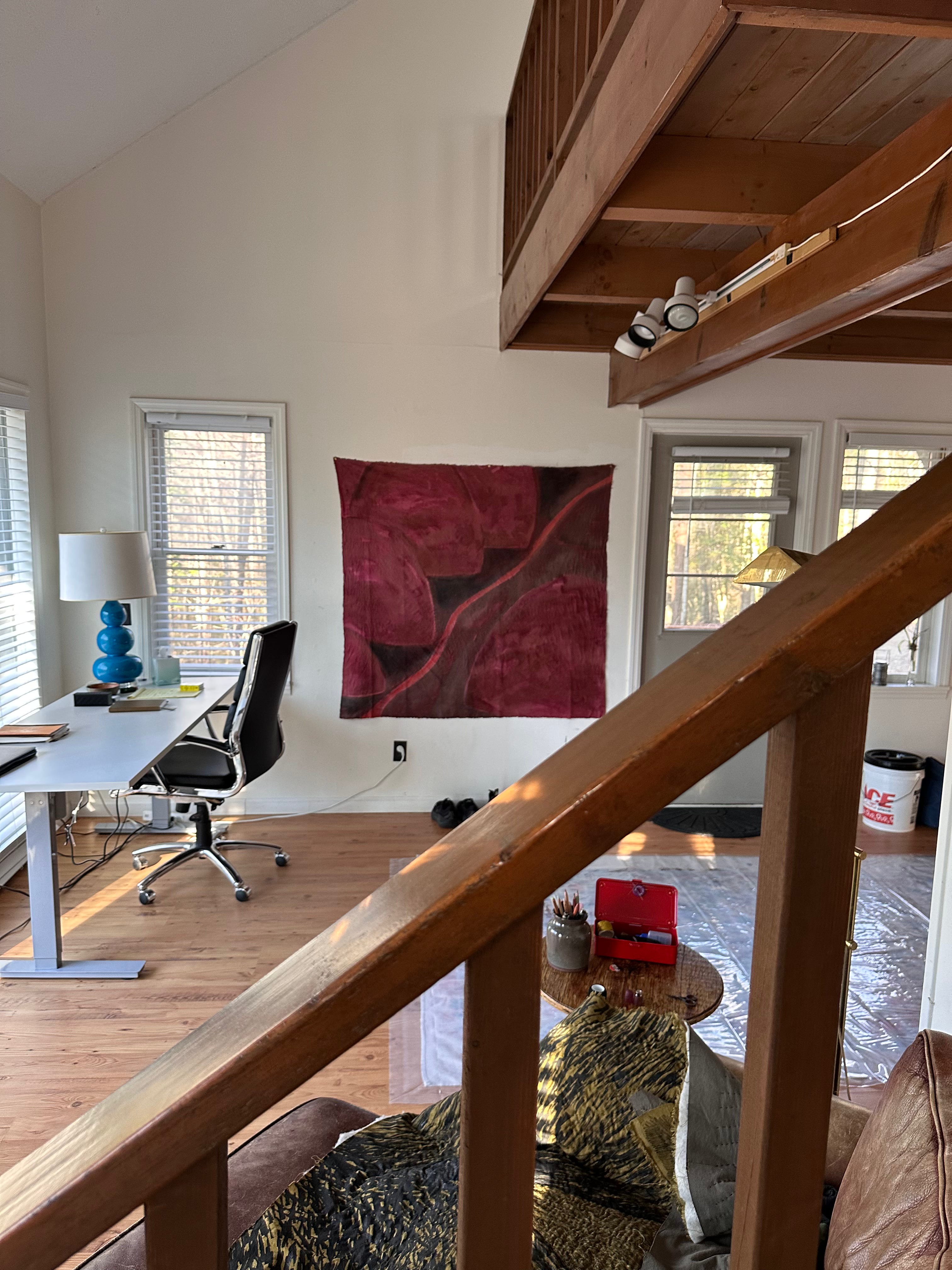
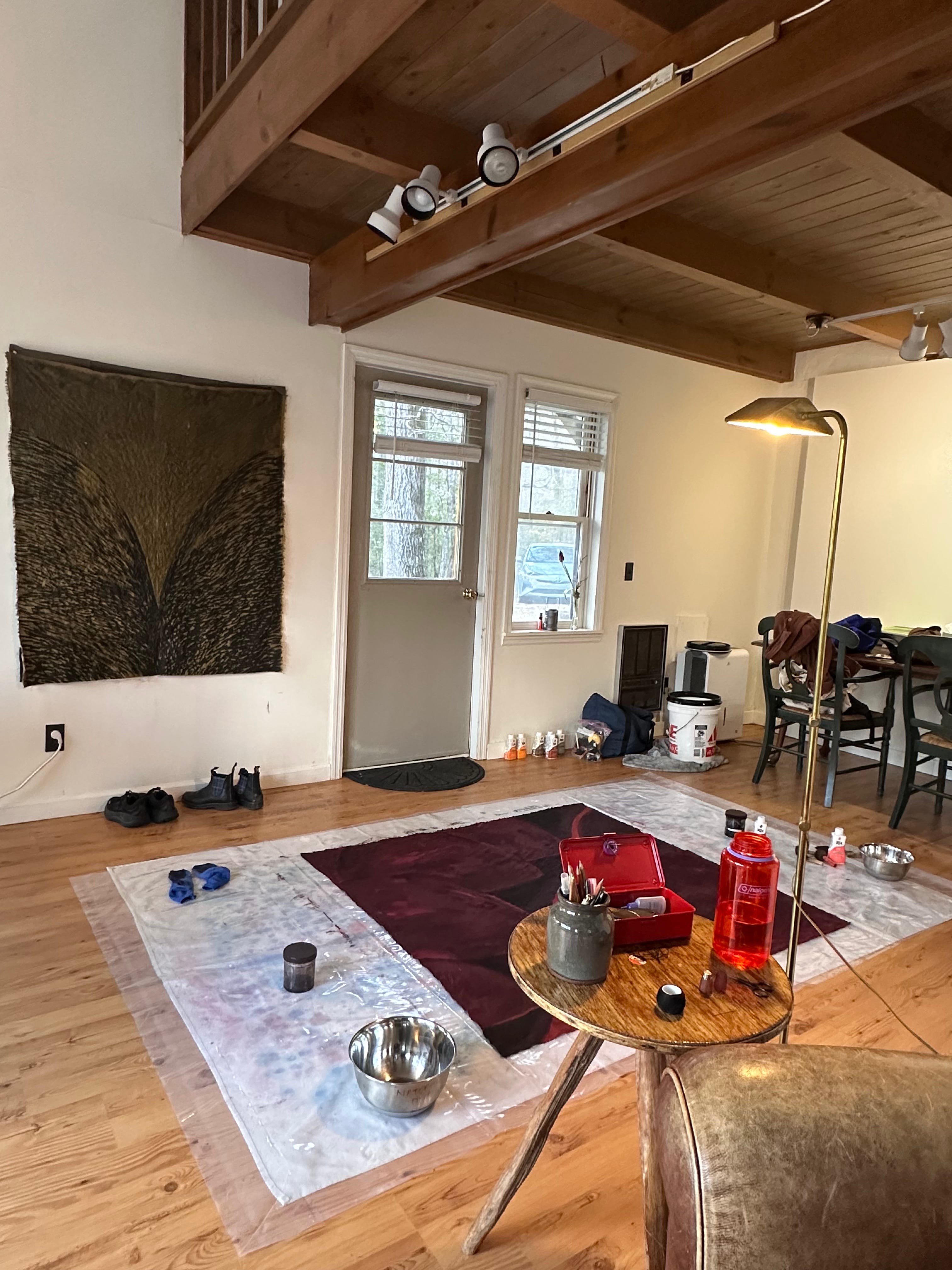
I made a series of five ceramic sculptures, a large dye painting, and finished hand-quilting a piece. Allof the work is being prepared for an exhibition in December at the Appalachian Center for Craft in Cookeville, Tennessee.
What inspires you? How did you start making what you do?
Life, mostly. Much of my work grows out of observing the world around me—small flickers of memory or ordinary moments that catch my eye. I’m drawn to beauty and craftsmanship, but also to unexpected visual moments, like color combinations I notice on a walk—different shades of moss against pine needles, for example. I move through the world constantly scanning, patiently waiting for something to spark. Inspiration can come from almost anywhere.
I had to take the long way around to arrive at the work I make now. My background combines both fine art and craft, and for a long time I felt I needed to make functional work before I could return to the fine art world with a fresh perspective.
I began quilting while I was sewing my own clothes. I became fascinated with the negative shapes left behind when cutting pattern pieces. At the time I was also drawing and printmaking, and quilting allowed me to work larger without framing. I had studied oil painting early in college, but I disliked brushes, canvas, and stretcher bars. Last year at VCCA, I started painting directly on damp raw silk laid flat on the ground, using dye and sponges. Those dye paintings now become the beginning of a quilt top, and I sculpt the painting through stitching.
With clay, I came to sculpture by way of functional pottery. For years I made pots but found myself increasingly constrained by perfectionism. When I returned to clay a few years ago, I made a promise that every piece would be functionless. Each form begins from a ring of coils, and none has a flat bottom that could hold anything.
How do you get into flow?
I adore this quote from John Cage and think of it often: “When you start working, everybody is in your studio—the past, your friends, enemies, the art world, and above all, your own ideas. But as you continue painting, they start leaving, one by one, and you are left completely alone. Then, if you’re lucky, even you leave.”
Sometimes flow comes as easily as breathing, and sometimes it’s more elusive. If a piece is actively “talking” to me, it arrives almost immediately. I keep works in progress pinned up around the studio so I’m constantly looking at them and letting them simmer. Then I can slip into the work, guided by silence, music, or a good audiobook if I’m hand quilting.
I also rely on a loose daily structure. I write each morning, read my tarot cards, and have tea and a small breakfast. Knowing what the week ahead looks like—what deadlines are approaching and what projects need attention—helps me prioritize my time.
I’m also a bit of a list fiend. My studio wall is covered with legal pad pages and post-its—ideas for future work, notes on where I am in ongoing projects, and reminders of things I want to try. Getting those thoughts out of my head and into the open means that if I ever find myself circling the question of what to do next, there are always plenty of options waiting. I can simply choose the one that feels most alive in the moment.
Do you have any recommendations for attaining flow?
If I’m really struggling to find it, it usually means I’m feeling too much pressure—burned out, uninspired, or some combination of the two. The best thing I can do is step away. I’ll go for a long walk, see a friend, go to the theater, visit a gallery or museum, read a book, take a nap—honestly, anything other than staying in the studio and forcing it.
A walk almost always helps reset my mind. It gets some of the anxious energy out of my body and gives me space to think. Most of the time, when I return to the studio I have a fresh perspective. Either the problem that was eluding me suddenly becomes solvable, or I’m able to slip back into the work and find that sense of flow naturally.
Why do you love/ did you choose Hambidge? What did you love doing at Hambidge?
What immediately drew me to Hambidge was the lack of internet in the artists’ personal studios. It made me feel incredibly seen. I wanted the experience of being in the woods, in a studio of my own, with far less outside noise and distraction.
I love Hambidge and always will for the balance it creates between deep, uninterrupted solitude and meaningful community time with other fellows. Living in Asheville, it’s a close drive, and the landscape feels very much like home. The community dinners are a highlight—after spending a day completely alone in the studio, it’s such a joy to see everyone’s faces and hear about what they’re working on.
I also loved studio visits with the other residents, hikes together, and the simple pleasure of leftovers from the kitchen. When I first arrived two years ago, I was honestly terrified of the dark and a little jumpy walking through the woods at night. But over time I came to love those quiet walks back to the studio after dinner.
Flow comes so easily at Hambidge—it feels like you’re almost perpetually in that state.
Where can people find you online?
My website. My instagram is @casey__engel
How can people buy/ support your work?
The best way to reach me is directly at caseyengelart@gmail.com. I recently took the leap into working as a full-time artist and teaching workshops, so connecting with collectors and supporters means a great deal.
I share most announcements and updates about new work on instagram, and I’m hoping to launch a newsletter later this year as another way to stay in touch.
Anything else people should know?
Anyone can make a quilt. One stitch at a time is enough.
What three books would you recommend?
The Slip: The NYC Street That Changed American Art Forever by Prudence Peiffer
Defy: The Power of No in a World That Demands Yes by Dr. Sunita Sah
Hold Still by Sally Mann
What three albums would you recommend?
Feist - Multitudes
Jens Lekman - Life Will See You Now
Weyes Blood - Titanic Rising
Artist(s) you love:
Eva Hesse, Louise Bourgeois, Ruth Asawa, Martin Puryear, Al Taylor, and Susan Rothenburg
Any other recommendations?
Go see art in person whenever you can—museums, galleries, plays, films, readings, performances. Nothing compares to experiencing it firsthand.
What keeps you sane right now?
Rituals, community, studio practice. For the first time, I’m finally doing what I’ve been dreaming about for ten years. As the dearly beloved Louise Bourgeois said, “Art is a guaranty of sanity.”
For the first time, I’m doing exactly what I’ve been dreaming about for the past ten years.
Current Recommendations:
Show up for the No Kings Protest this Saturday. Nationwide locations.
Delete your news app. If you need to know, you’ll know. Our brains aren’t designed for this.

Next week:
The Everything Amazes Me Q and A with TK Smith.
*I later realized that Ruth Asawa and her family were interned at the Rohwer Relocation Center in Arkansas, the same internment center where my father-in-law (who was Japanese) and his family were interned. Like my father-in-law’s family, the Asawas spent most of 1942 in a horse stall at the Santa Anita race track.
Artists' Residencies Are Transformational (Plus 6 Upcoming Residency Deadlines)

I spent the last month at the Hambidge Center and it was transformational, one of the best months of my life. In case you don’t know, The Hambidge Center is an artist’s residency in North Georgia founded in 1934 by Mary Hambidge, in memory of her partner Jay Hambidge, a scholar of dynamic symmetry. Hambidge is located on approximately 600 acres on the e…
Love the Louise Bourgeois quote
Thanks for writing this. I love reading about artists and their process, and Casey Engel is new to me.